Human Archive Center (Series)
- Sound Piece
- 2024~
Documenting the relationship between humans and a certain object or place
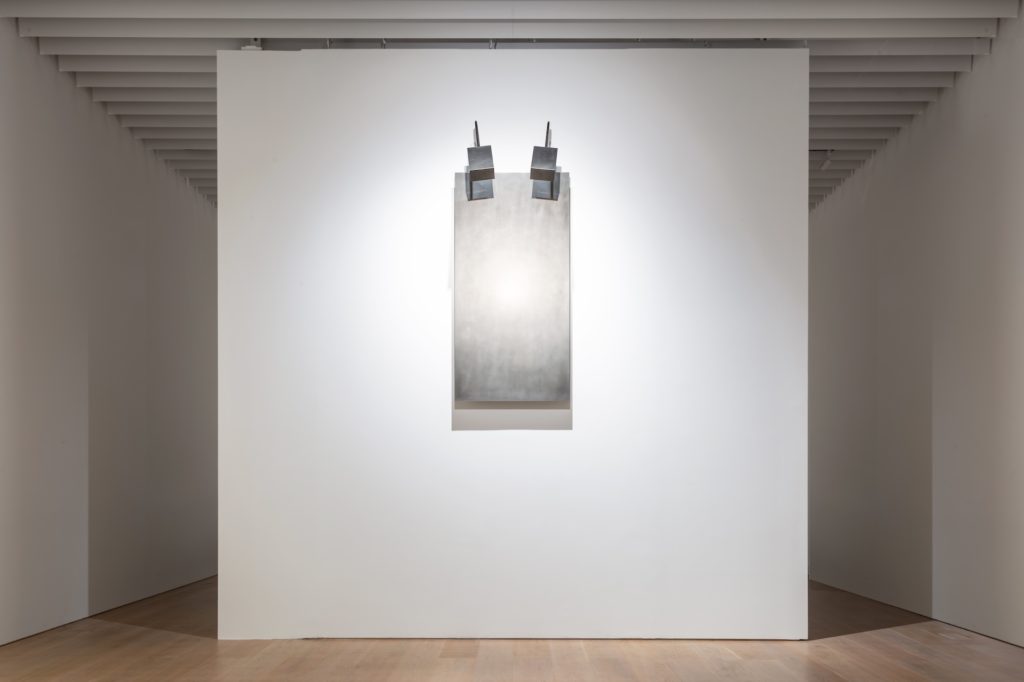
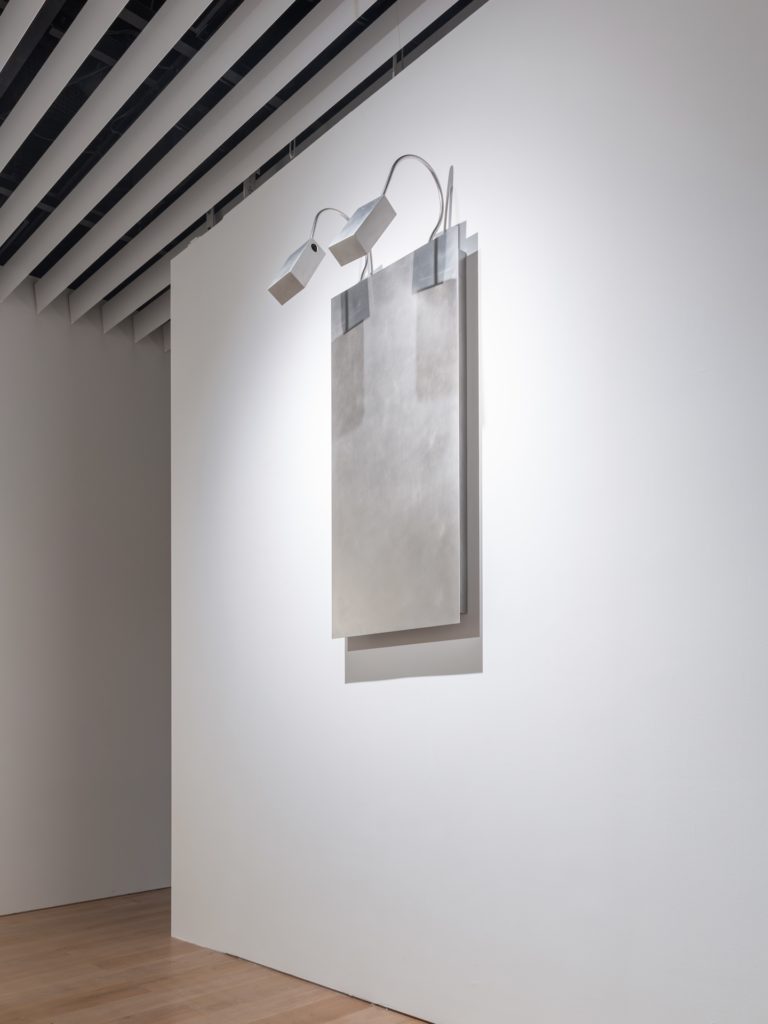
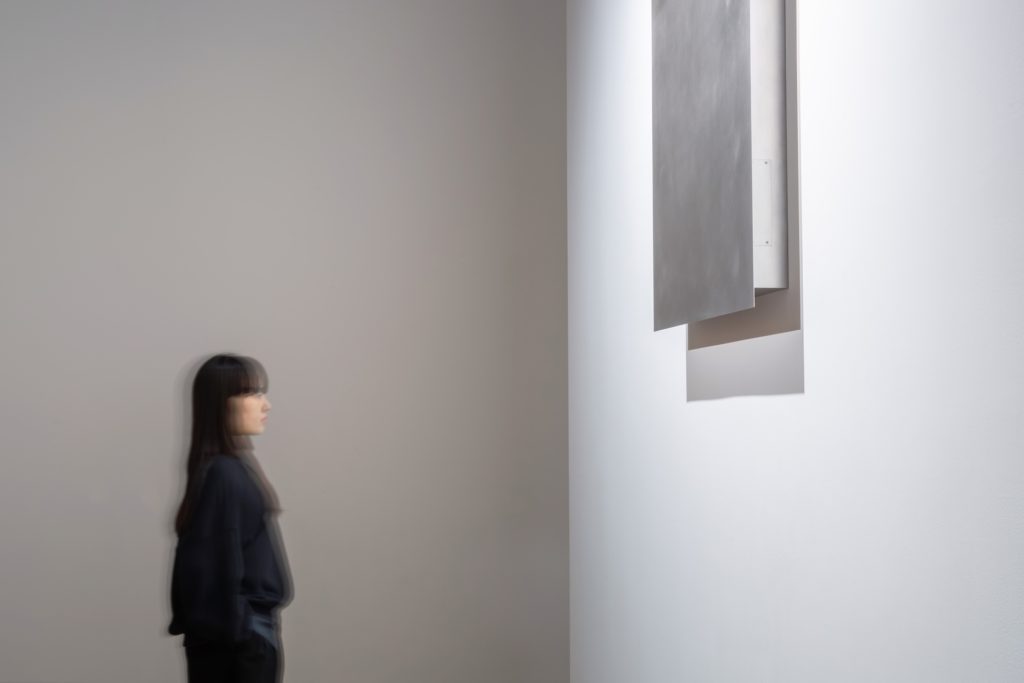
All works in the Human Archive Center series are intentionally designed to appear the same, even though their sizes may differ. The stainless steel panels, which softly reflect light, also function as resonant surfaces for the sounds played through the two installed speakers.
Furthermore, this recording becomes a kind of archive of humanity, not from the perspective of the artwork, the place, or even the people themselves, but from something else entirely. From the behavior of the viewers, you can tell, for example, that it takes nearly ten minutes of waiting in line to reach the front of the painting; that the space is crowded, with nearby voices overlapping; that a mother, undeterred by her crying child, remains in line out of enthusiasm; and that selfie sticks are prohibited.
Marco Polo House (2024)
The stage work Tangent, in which I was performing, was invited to Venice. After staying for a week at the Malibran Theatre, I realized that the canal behind the theater, which we used as a place to take breaks, was actually part of a gondola route for tourists. Whenever I sat there with a cup of coffee, the gondola guides passing by would always point to our theater at the same spot and loudly say, “See? This is Marco Polo’s house.” Western tourists would show great interest and excitement, while Asians, including ourselves, didn’t react particularly strongly. Above us was a stone plaque that read: “QUI FURONO LE CASE DI MARCO POLO (Here stood the houses of Marco Polo) / CHE VIAGGIÒ LE PIÙ LONTANE REGIONI DELL’ASIA E LE DESCRISSE (He traveled to the farthest regions of Asia and described them).” Every time we took a break, I recorded the voices coming from the gondolas as they passed by one after another.
Rosetta Stone (2024)
The Rosetta Stone in the British Museum is enclosed on all sides by protective glass. Large numbers of people gather from every direction to catch a glimpse of the stone, but unlike the crowd around the Mona Lisa, no one raises their voice, tries to push others aside, or takes many photos. Everyone remains calm, approaching the stone in turn, and once it appears before their eyes, they step aside as if they have fulfilled their purpose. Around them, guides are explaining the Rosetta Stone. In 2022, more than 2,500 Egyptian archaeologists submitted a petition calling for the return of the Rosetta Stone.
Bataan Technology Park (2025)
I was able to visit a former refugee center in Bataan, Philippines, which once functioned as the Philippine Refugee Processing Center. The center appears to have been renamed Bataan Technology Park by the government for economic development purposes, and its operational funding has been suspended. Despite the name change, the facilities and surrounding area remain as they were at the time, and it feels as though local residents are taking care of the place, I saw some people were repainting the signs of the center.
As I walked deeper into the site, I came across a collection of religious monuments created by refugees who once lived there, each piece reflecting memories of their respective homelands. The unmaintained paths sink deeply underfoot with the sound of dry leaves. The friends who visited with me were trying to read out the fading inscriptions on a stone monument they had found.
Nénette (2025)
Nénette, who was born in Borneo, spent more than fifty years in the zoo located inside the Jardin des Plantes in Paris. Children would point at her and ask, “Is Nénette the same as me?” “Nénette came here in 1972.” Humans become excited by Nenette’s every tiny movement, though she can barely move anymore. At the entrance to the exhibit room, a sign reads, “Please be quiet for the animals.” Nénette has lived entirely to suit our purposes. Unable to stop recording, I stepped outside the exhibit room and ran into her keeper, who was locking Nénette’s cage. Many keys hung from her waist, and with their sound, she disappeared into the distance. Surely, she was also me.
The existence of animals and humans remains unchanged, yet time (and era) transforms the relationship between us. This prompts us to perceive time not as linear progression, but as something recurring – fleeting for visitors, yet endlessly repeating for Nénette.
Credit
- Metal Works: Kodai Kawai(mujica)
- Media Player: ATL. Inc
- Photo: So Mitsuya